



Similarities and Differences with the Tech Bubble Era
This chart was so striking that we had to share it.

The recent price movement of the S&P 500 benchmark is tracking very closely to the time-period of the Tech Bubble in the late 90s/early 2000s. In the late 1990s, the rally continued for another two years after the point where the market is tracking today.
This chart is only comparing price movement of the S&P 500 benchmark. Not earnings. Not valuation. Not economic growth.
How Do Earnings Compare?
One of the big criticisms at the time of the dot.com era was that so many of the start-up companies were losing money or had very little in earnings. However, then and now, S&P 500 companies are among the largest companies in the world and they earn real profits.
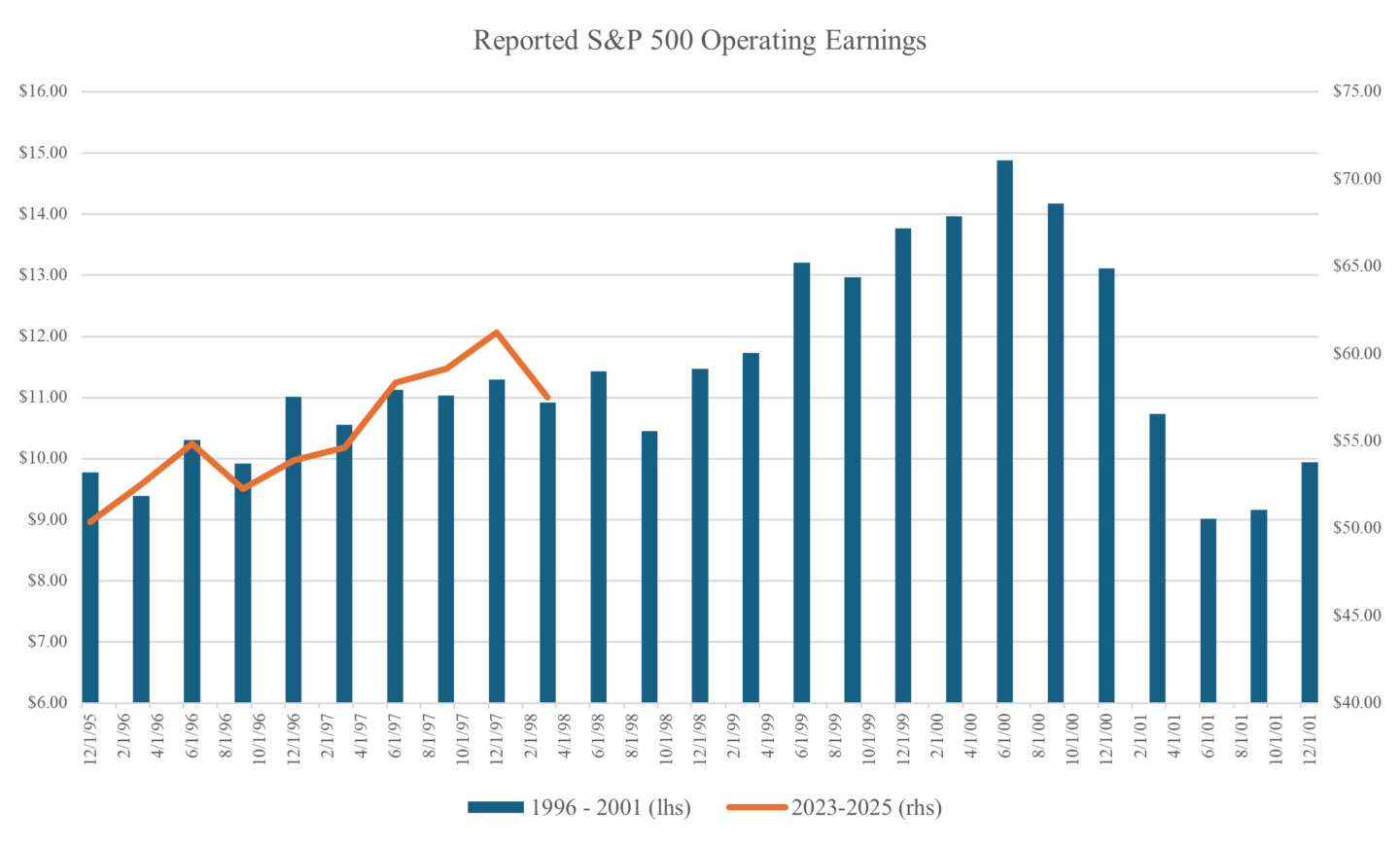
Below, we have compared the actual earnings of the S&P 500 companies for the time-period from 1996 to 2001 with recent earnings data from 2023 to 2025, to correspond with the price comparison in the chart by Dr. Torsten Slok above.
So far, there is a similar track to the earnings but the time period is too small to draw any conclusions yet.
Source: S&P Global; Archer Bay Capital LLC
Valuation Comparison
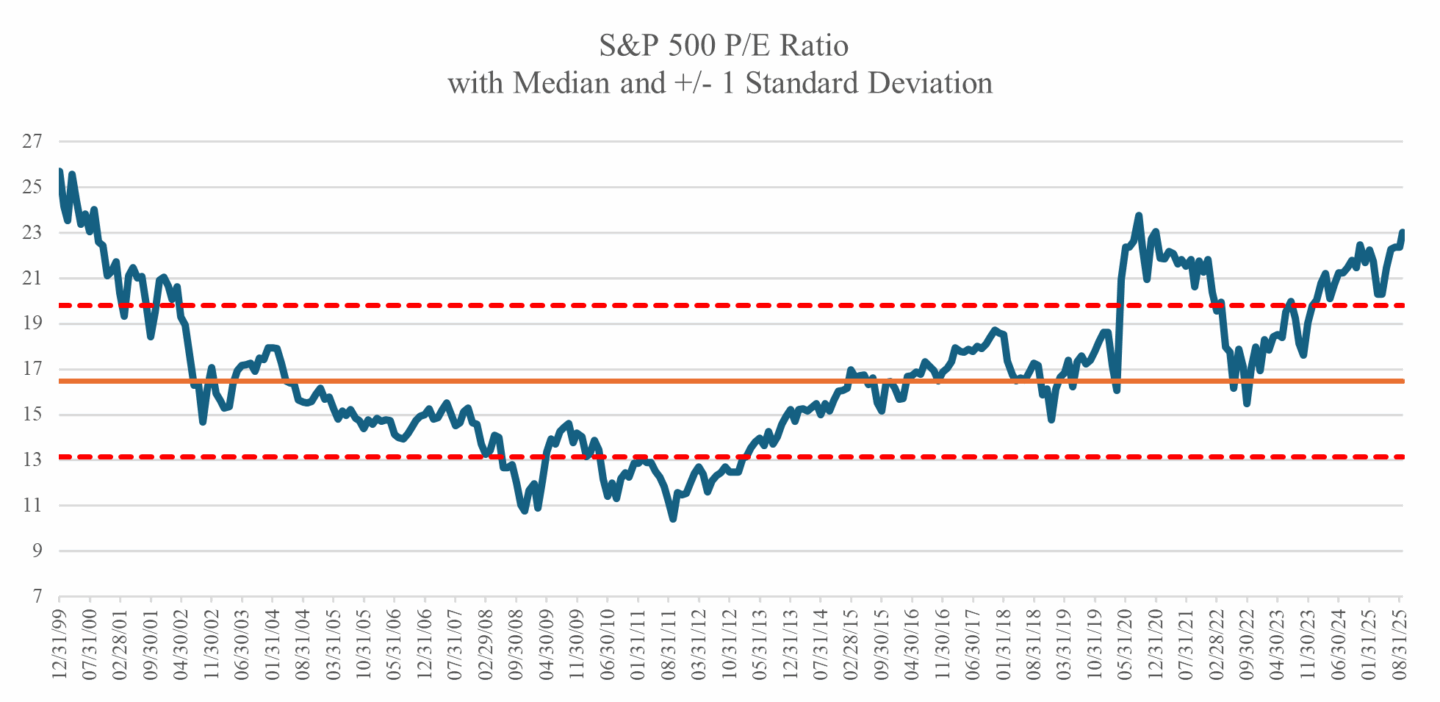
Combining both price and earnings data, the forward Price-to-Earnings ratio (P/E) is similar today to the prior tech bubble. Both periods experienced a P/E ratio that was greater than one standard deviation above its mean.
Source: FactSet Research; Archer Bay Capital LLC
We are concerned about the current high valuation. When it happened during the dot.com bubble, the contraction in P/E over the next ten years led to lower than historical-average equity returns. While we will continue to watch this closely, it is too early to tell if history will repeat itself.
Economic Growth
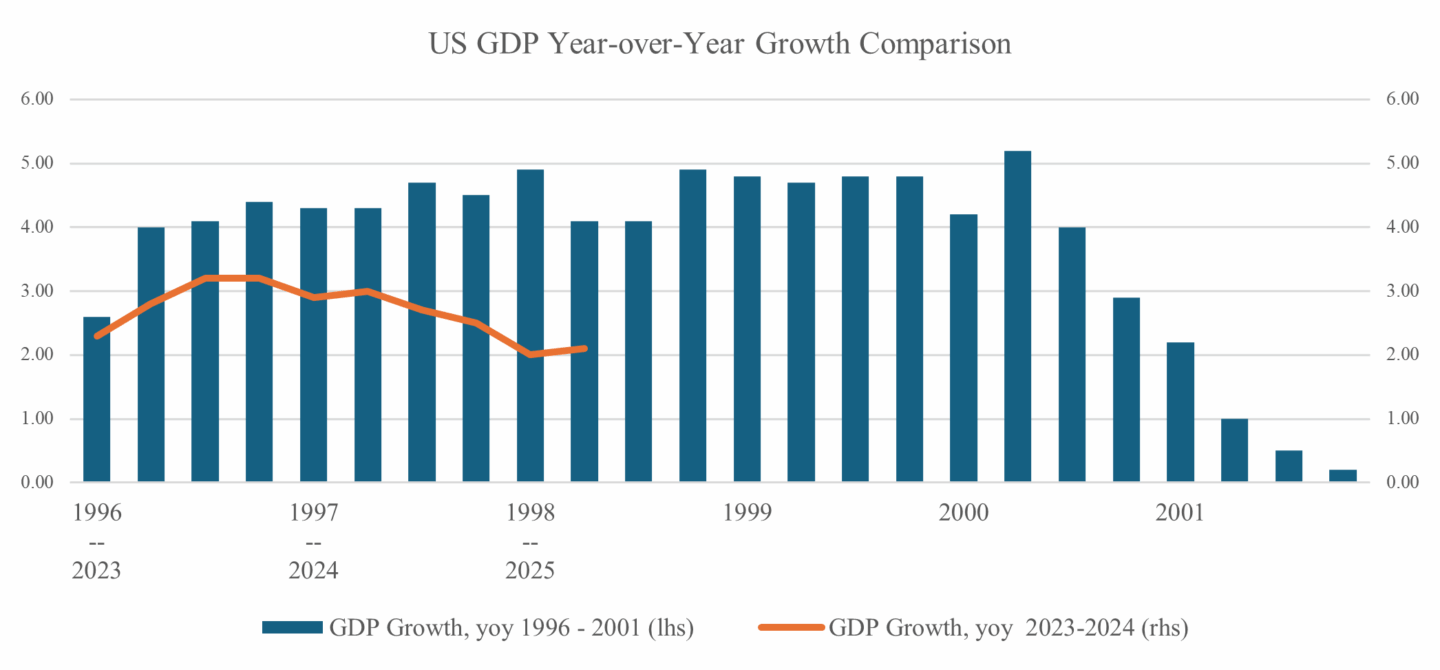
There is not a meaningful correlation between GDP growth and stock prices, but it can be helpful to understand the business environment. Large declines in stock prices frequently, but not always, coincide with recessions. Here is a comparison of the quarterly GDP growth for the two time periods.
Source: FactSet Research; Archer Bay Capital LLC
This chart is the most dis-similar of the two time periods. GDP has been slowing down during the most recent years, even as corporate earnings have been growing.
Conclusion
The past is not a perfect guide to the future but we do find the similarities, and the differences, interesting.
We do expect stocks to fall during periods of corporate earnings decline, but predicting when that happens is another story. The bias of corporate earnings is upwards and that keeps us invested for the long-term.
Please let us know if you have questions or would like to discuss in greater depth.