



Tariffs and the Markets
We’ve spent some time reviewing academic papers and research reports on the long-term impact of tariffs on the economy and markets. Tariffs can benefit domestically oriented companies and be used as a bargaining chip in trade negotiations, but they generally hurt export-oriented companies due to reciprocal tariffs by other nations.
There have been plenty of tariffs used in the past to protect domestic businesses. The chart below illustrates the size of the tariffs (tariff rates) and it identifies the legal acts that initiated them.
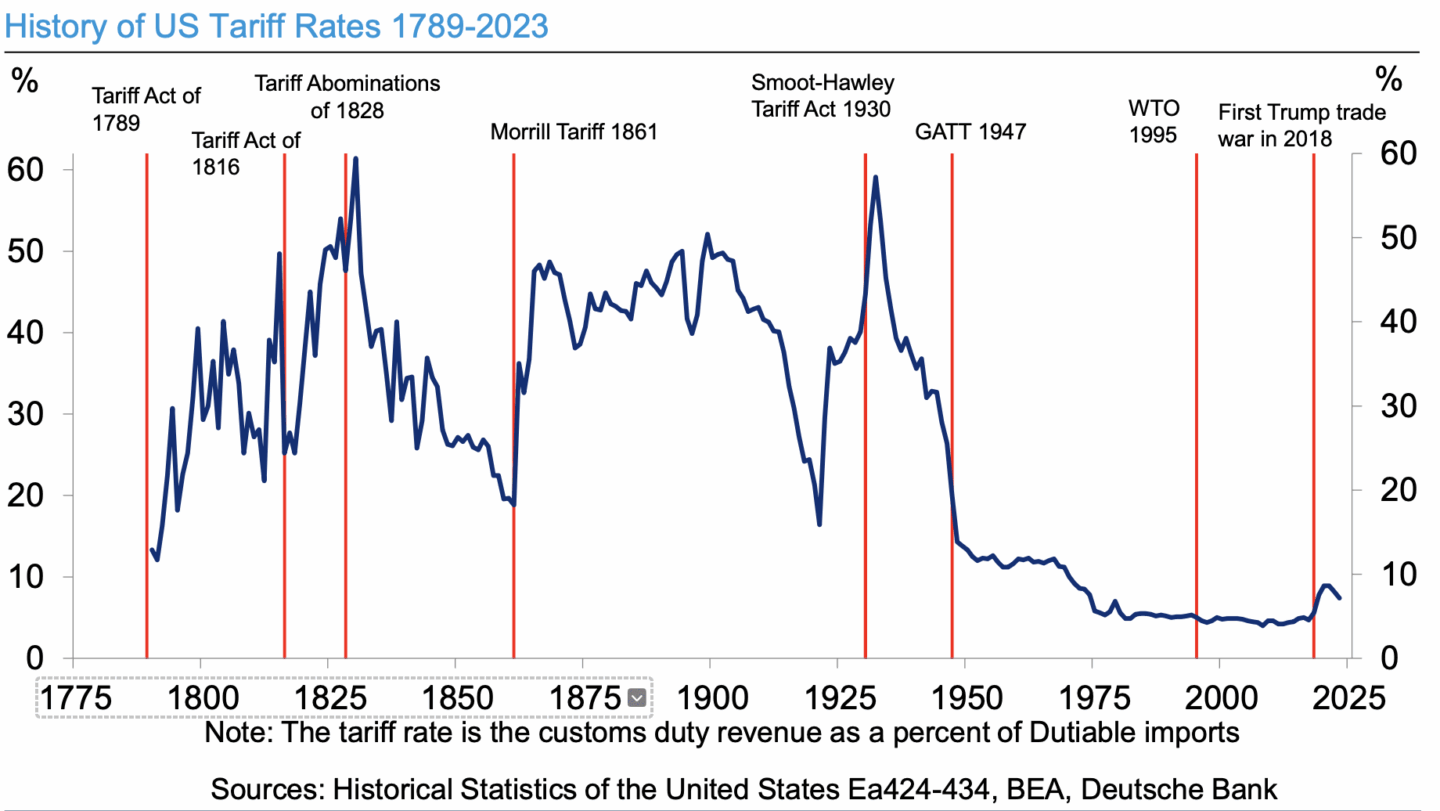
There were relatively high tariffs throughout our history which shifted after the Great Depression. Many trade barriers were reduced after World War II for both economic and political reasons.
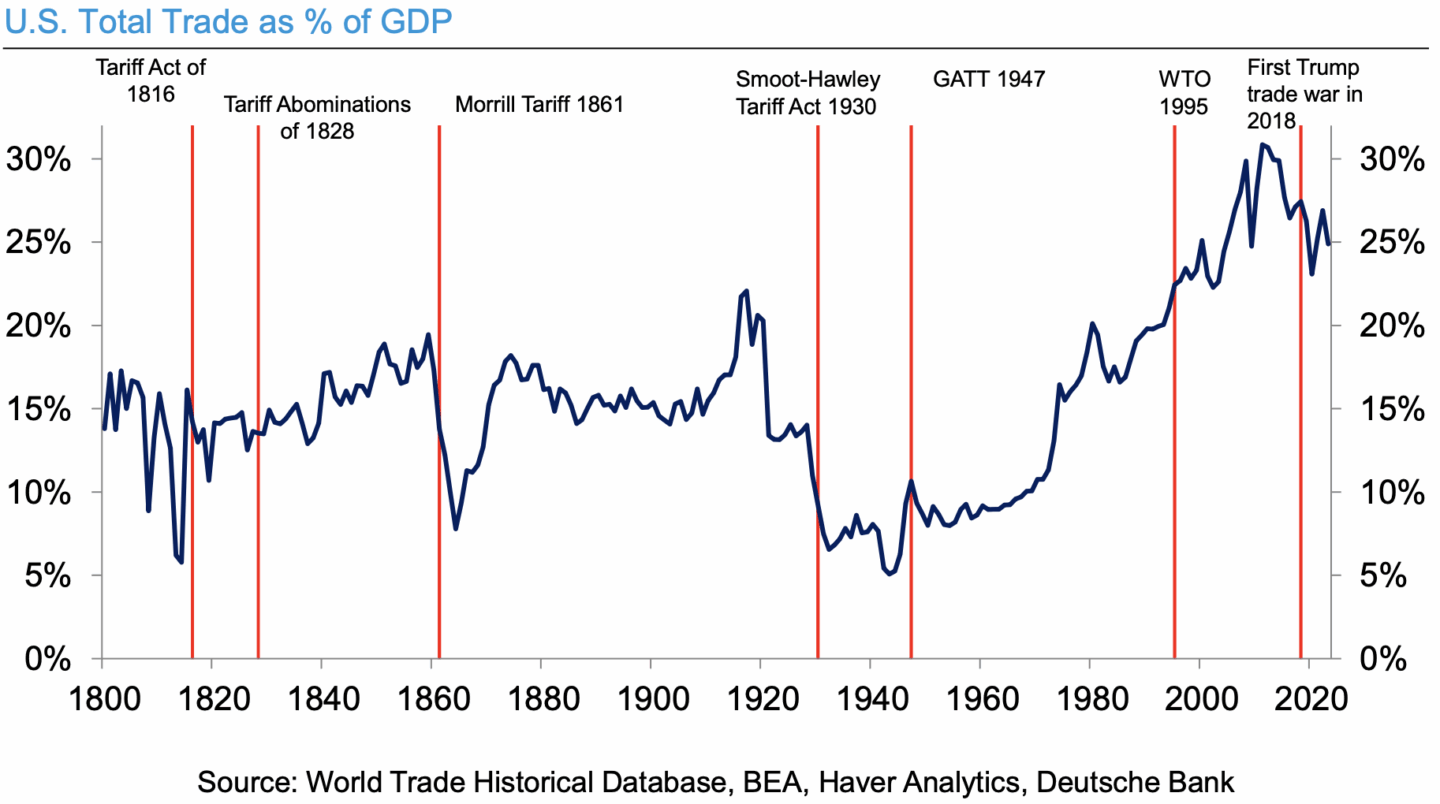
The chart below shows how much overseas trade has mattered to the US economy over time. US foreign trade is measured as a percentage of Gross Domestic Product (GDP) to better reflect its impact on the economy as a whole. Foreign trade has become a greater part of the US economy since the end of the World War II.
We’ve found conflicting reports on the effect on investment returns. A recent article in the investment journal, Enterprising Investor, claims that there is no impact.
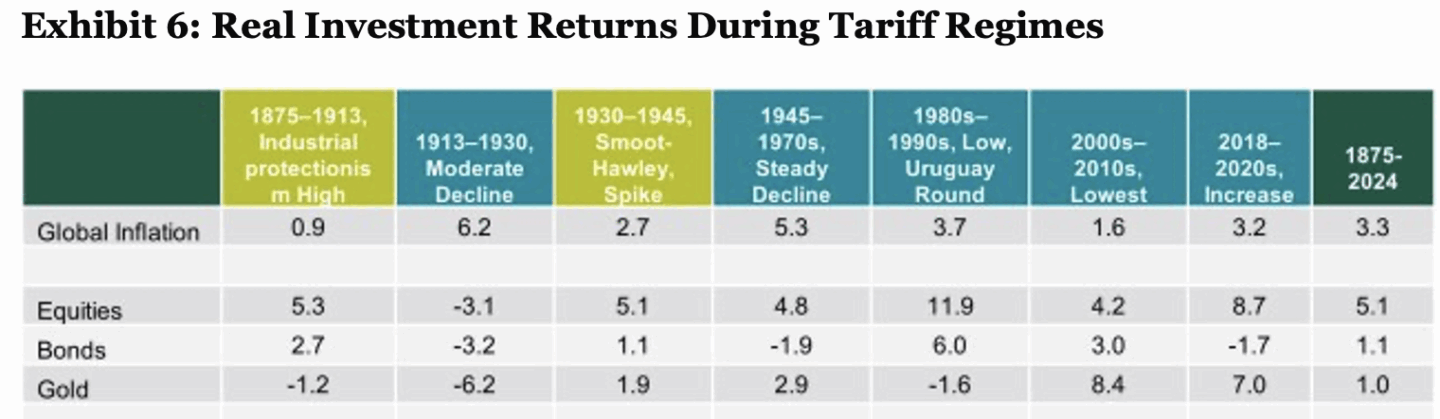
Source: Enterprising Investor, “Tariffs and Returns: Lessons from 150 years of Market History”, Baltussen, et al.
It is not the easiest table to read, but in summary, the average inflation-adjusted annual return of stocks from 1875 to 2024 was 5.1% (including the effects of inflation the average annual return during that period was 8.4%). Periods of high tariffs had average annual returns of 5.3%, 5.1%, and 8.7%. Low tariff periods had average annual returns of -3.1% (includes the start of the Great Depression), 4.8%, 11.9%, and 4.2%.
In an aside, we find it interesting that the average annual return of bonds and gold from 1875-2024 was only 1%, while annual inflation averaged 3.3%.
Alternatively, another academic paper published recently is showing a dramatically negative effect.
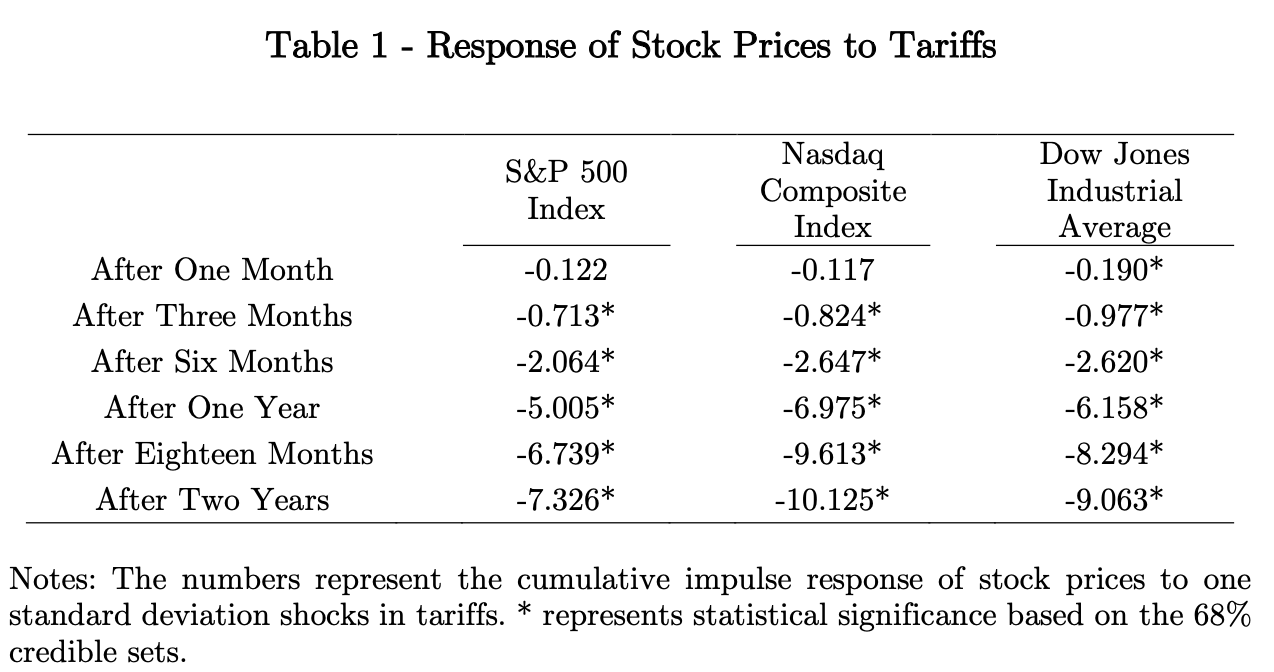
Source: “US Tariffs and Stock Prices”, Hakan Yilmazkuday, May 25, 2025 https://papers.ssrn.com/sol3/papers.cfm?abstract_id=5215769
This research shows that the impact of tariffs has an increasingly negative effect on returns as more time passes. We think the biggest weakness in this paper is the time period used for the report only covers ten years, 2015-2024.
Our Conclusion
You will not be surprised that we follow the direction of corporate earnings for insight into the direction of stock prices and that is true for periods of higher or lower tariffs. Some companies will benefit and some will be hurt.
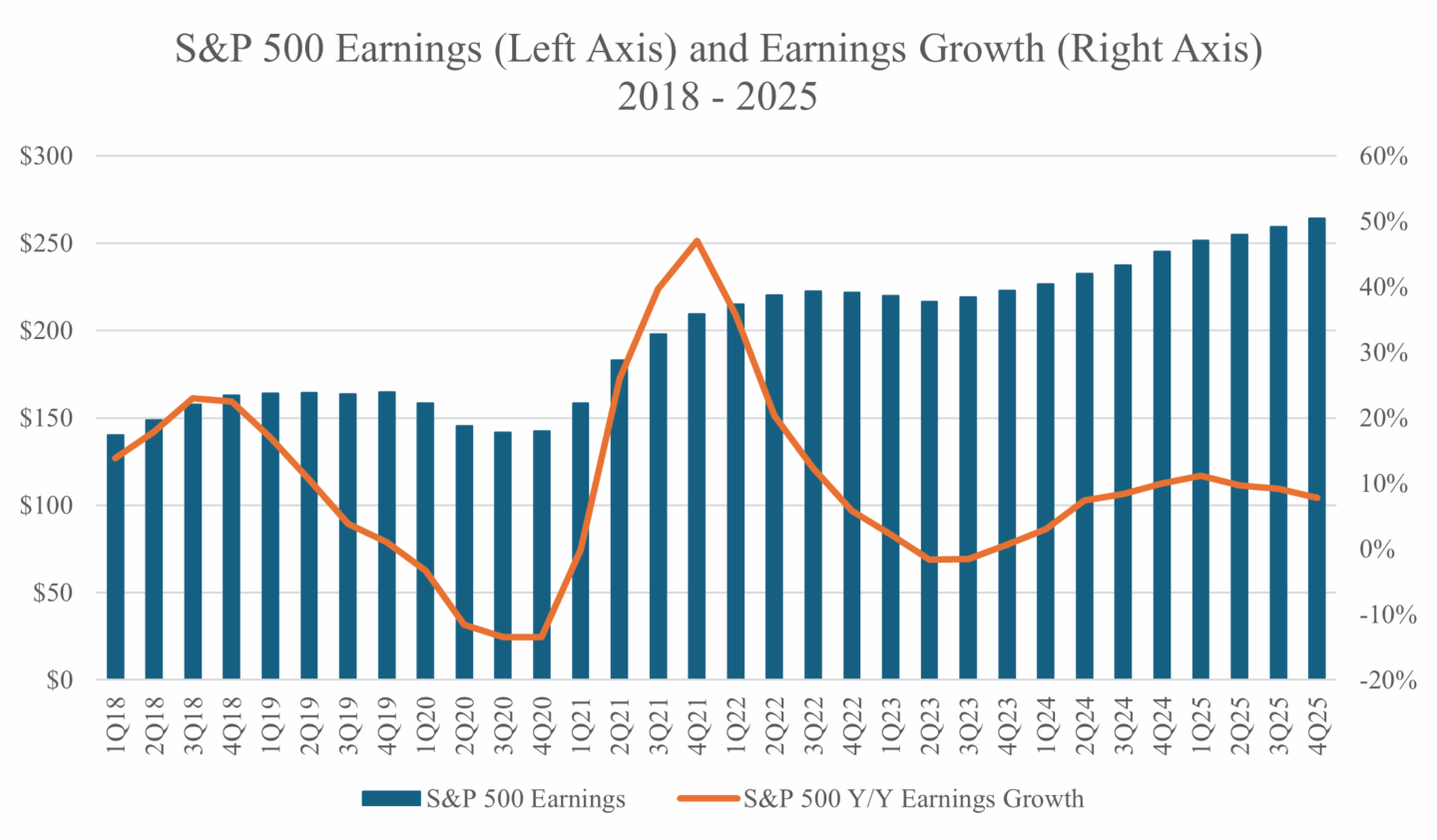
Note: Earnings for April – December 2025 are estimates
Source: FactSet Data Systems; LSEG, Archer Bay Capital LLC
We can see that earnings growth did decline in 2019 after tariffs were initiated; the negative impact was compounded by COVID. Following the fourth quarter of 2020, profits rebounded but then the growth rate declined again in 2022.
Looking forward, corporate earnings expectations for 2025 have moderated but, so far, positive growth is still expected. We expect that there will be some struggles with supply chains as companies adjust, but ultimately profits will recover and stock prices will follow along.
